COMMISSION ON IMMIGRANT AFFAIRS REGULAR MEETING MINUTES MONDAY, AUGUST 3, 2026 The Commission on Immigrant Affairs convened in a regular meeting on Monday, August 3, 2026, at 310 W 2nd Street in Austin, Texas. Chair Dorantes called the meeting to order at 6:34pm. Commissioners in Attendance: Miriam Dorantes, Chair Commissioners in Attendance Remotely: Alondra Johnson, Vice Chair Adrian De La Rosa Aditi Joshi Jeanne Kaba Diane Kanawati Wilson Ramirez Meghna Roy Caroline Solis Commissioners Absent: Azeem Edwin Melissa Ortega Yohanna Saucedo PUBLIC COMMUNICATION: GENERAL None. APPROVAL OF MINUTES 1. Approve the minutes of the Commission on Immigrant Affairs Regular Meeting on July 6th, 2026. The minutes of the July 6th , 2026 regular meeting of the Commission on Immigrant Affairs was approved on Chair Dorantes’ motion, Commissioner Kaba’s second on a 7-0 vote. Commissioner Roy was off dais. Commissioners Edwin, Joshi, Ortega, and Saucedo were absent. 1 STAFF BRIEFING 2. Staff briefing regarding the new Officer Involved Shooting (OIS) Dashboard. Presentation by Sara Peralta, Public Information and Marketing Program Manager, Austin Police Oversight and Crystal Kimbrough, Policy Compliance Consultant, Austin Police Oversight. Briefing was given by Sara Peralta, Public Information and Marketing Program Manager, Austin Police Oversight and Crystal Kimbrough, Policy Compliance Consultant, Austin Police Oversight. 3. Staff briefing regarding the Austin Resilience Network. Presentation by Natalie Lyell, Resilience and Partnerships Manager, Austin Emergency Management. Briefing was given to Natalie Lyell, Resilience and Partnerships Manager, Austin Emergency Management. DISCUSSION AND ACTION ITEMS 4. Approve a Recommendation to Council regarding SAFE ATX. The motion to approve a recommendation to council regarding SAFE ATX was approved on Chair Dorantes’ motion, Commissioner Kanawati’s second on an 8-0 vote. Commissioners Edwin, Joshi, Ortega and Saucedo were absent. WORKING GROUP UPDATES 5. 6. Update from the Joint Inclusion Committee representative regarding the July meeting of the JIC. Update provided by Commissioner Kanawati. Update from Quality-of-Life Study Working group regarding recent meetings and study progress. (Current Members: Vice Chair Johnson, Commissioners: Edwin, Kaba, Kanawati, Joshi, and Ortega) Update provided by Commissioner Kanawati. FUTURE AGENDA ITEMS -Invite Austin Police to answer questions about Austin Police Oversight Officer Involved Shooting Dashboard -JIC Update on budget recommendations -Update from the Quality of Life Study working group ADJOURNMENT The meeting was adjourned at 8:19 pm on Commissioner Joshi’s motion, Vice Chair Johnson’s second with no objection. The minutes of the July 6th regular meeting of the Commission on Immigrant Affairs …
RECOMMENDATION TO COUNCIL COMMISSION ON IMMIGRANT AFFAIRS Recommendation 20261005-006: Recognition of Recent APD Shooting & Supporting Measures to Provide Public Accountability WHEREAS, on July 24, 2026, 17-year-old Anthoneil Williams II was fatally shot by Austin Police Department (APD) officers at a neighborhood park near Baden Lane and Dessau Road; and WHEREAS, subsequent official reviews and Austin Police Department disclosures revealed that Anthoneil Williams II was unarmed and the object in his waistband was a water bottle at the time officers discharged their weapons; and WHEREAS, while the shooting remained under active investigation, Austin Police Chief Lisa Davis publicly stated that “all points” indicated the incident was a “suicide by police,” assigning a possible motive to Anthoneil Williams II before the completion of independent and thorough investigations; and WHEREAS, the National Police Accountability Project (NPAP), a national organization dedicated to police accountability and civil rights, specifically criticized APD's rapid characterization of Anthoneil Williams II's death as “suicide by cop,” raising concerns that assigning such a label before a meaningful investigation shifts attention away from questions of de-escalation, use of force, and governmental accountability; and WHEREAS, the Police Executive Research Forum (PERF), a national organization of police executives and law-enforcement professionals, recognizes that encounters involving individuals believed to be seeking a lethal police response should prompt specialized crisis intervention emphasizing time, distance, communication, patience, and de-escalation, and has documented that many such encounters can be resolved without the use of lethal force; and WHEREAS, terminology such as “suicide by cop” or “suicide by police,” particularly when used before an investigation has established a person's intent, risks shifting responsibility for a police- involved death onto the deceased, making that individual the perceived causal actor in their own death while prematurely shaping public understanding of the government's use of deadly force; and WHEREAS, the City of Austin should use neutral, fact-based language when communicating about police-involved deaths and should distinguish between evidence concerning a person's possible mental or behavioral health crisis and the separate question of whether officers' actions, tactics, de-escalation efforts, and use of force were appropriate; and WHEREAS, repeated patterns of officer misconduct, insufficient de-escalation, and unjustified use of force have historically inflicted severe trauma and deadly harm across Austin communities; and WHEREAS, civilian oversight bodies, including the Community Police Review Commission, require unfettered access to all body-worn camera footage, dispatch recordings, internal affairs files, and investigative materials to ensure true transparency, …
RECOMMENDATION TO COUNCIL Commission on Immigrant Affairs Recommendation Number: [20261005-007]: Support for the Family and Community Affected by the September 20, 2026 ICE-Involved Shooting in Austin Date of Approval: Recommendation: The Commission on Immigrant Affairs recommends that Austin City Council take immediate action to support our community member, Wilber Rafael Garces Perez, his family, and the broader Austin immigrant community following the September 20, 2026, shooting of Mr. Garces Perez by a U.S. Immigration and Customs Enforcement (ICE) officer in North Austin. The Commission calls on Austin City Council to ensure access to medical care, legal support, transparency, and community safety resources for those affected, and to advocate for full accountability and an independent investigation into the incident. Description of Recommendation to Council: ● Direct City resources and staff, where legally permissible, to connect Mr. Garces Perez's family and legal counsel with available victim support services, translation and interpretation assistance, and mental health resources. ● Formally request that federal authorities, including the Department of Homeland Security (DHS) and ICE, ensure Mr. Garces Perez receives immediate and adequate medical care for his injuries, and that he is not deported before a thorough, independent investigation into the shooting is completed, including an explanation for the lack of medical treatment. ● Support Austin Police Department's (APD) independent investigation into the incident and request that City Council receive regular public updates on the investigation's findings and any related body camera, dashcam, or witness video evidence. ● Request that City Council Members whose districts are directly affected by this incident, including Council Members Chito Vela (District 4) and Mike Siegel (District 7), work together on all outcomes related to this incident, given that the affected area sits along the seam between their districts. ● Request that the City of Austin and Travis County, including elected officials and executive staff, do everything within their power to ensure all facts of this case are shared publicly and are made language-accessible in at least English and Spanish. DRAFT ● Call for full accountability for this incident, including ensuring the federal agent involved does not leave the state so that he may be questioned, publicly identify the federal agent by name, and that all relevant body camera footage is turned over to local authorities. ● Call on APD to prioritize peaceful de-escalation strategies and to uphold the constitutional right to assembly during public protests related to this incident. ● …
REGULAR MEETING OF THE ART IN PUBLIC PLACES PANEL MONDAY, OCTOBER 5, 2026, AT 6:00 P.M. VIRTUAL MEETING Art in Public Places Panel may be participating by videoconference. The meeting may be viewed online at: Art in Public Places Panel: September Virtual Meeting | Meeting-Join | Microsoft Teams. Public comment will be allowed in-person or remotely via telephone. Speakers may only register to speak on an item once either in-person or remotely and will be allowed up to three minutes to provide their comments. Registration no later than noon the day before the meeting is required for remote participation by telephone. To register to speak remotely, contact Art in Public Places Manager Jaime Castillo at jaime.castillo@austintexas.gov or (512) 974-7852. CURRENT PANEL MEMBERS: Kristi-Anne Shaer, Chair Heidi Schmalbach, Arts Commission Liaison Andrew Danziger Camille Jobe AGENDA CALL TO ORDER PUBLIC COMMUNICATION: GENERAL Lindsey Millikan, Vice Chair Fatima Carbajal Bernardo Diaz The first 10 speakers signed up prior to the meeting being called to order will each be allowed a three- minute allotment to address their concerns regarding items not posted on the agenda. APPROVAL OF MINUTES 1. Approve the minutes of the Art in Public Places Panel Regular meeting September 14, 2026. STAFF BRIEFINGS 2. Staff briefing regarding Art in Public Places Program, including Conservation, Current Projects and Milestones. Presentation by Jaime Castillo, AIPP Manager, Austin Arts, Culture, Music, and Entertainment. DISCUSSION ITEMS 3. 4. Discussion of Arts Commission Liaison Report on Action Items from September 21, 2026, Arts Commission Meeting. Presentation by Heidi Schmalbach, Arts Commission Liaison. Discussion of the Austin-Bergstrom International Airport Art in Public Places Projects 50% Final Design Update. Presentation by Alex Irrera, Art in Public Places Coordinator Senior, Austin Arts, Culture, Music and Entertainment. DISCUSSION AND ACTION ITEMS 5. 6. 7. 8. 9. 10. Approve a recommendation to Arts Commission for the Northeast Service Center: Suspended 3D Art in Public Places Artist Selection. Presentation by Rebecca Rende, Art in Public Places Coordinator Senior, Arts, Culture, Music and Entertainment. Approve a recommendation to Arts Commission for the Northeast Service Center: Cistern Murals Art Call. Presentation by Rebecca Rende, Art in Public Places Coordinator Senior, Arts, Culture, Music and Entertainment. Art in Public Places Panel Guidelines and Associated Polices Working Group report and possible action. Approve a recommendation regarding updates to the Art in Public Places Guidelines and Policies per City Council Resolution No. 20250306-029. Presentation by Jaime …
Arts Commission Community Interest Announcement Name of Event People’s Gallery Opening Exhibition and Arts & Humanities Kickoff October 2, 2026 (6:00 p.m. – 9:00 p.m.) Austin City Hall 301 W 2nd St, Austin, Texas 78701 A quorum of the Arts Commission members may be present. No action will be taken, and no Arts Commission business will occur. For more information, please contact: Jesus Varela 512-974-2444 Jesus.Varela@AustinTexas.gov
SPECIAL CALLED MEETING OF THE HISPANIC LATINO QUALITY OF LIFE RESOURCE ADVISORY COMMISSION TUESDAY, SEPTEMBER 29, 2026, 5:00 PM AUSTIN PERMITTING AND DEVELOPMENT CENTER, ROOM 1401 6310 WILHELMINA DELCO DRIVE AUSTIN, TEXAS Some members of the Hispanic Latino Quality of Life Resource Advisory Commission may be participating by videoconference. Public comment will be allowed in-person or remotely via telephone. Speakers may only register to speak on an item once either in-person or remotely and will be allowed up to three minutes to provide their comments. Registration no later than noon the day before the meeting is required for remote participation by telephone. To register to speak remotely, contact Nekaybaw Watson at nekaybaw.watson@austintexas.gov or 512-974-2562. CURRENT COMMISSIONERS: Lyssette Galvan, Chair Amanda Afifi Andrea Flores Yesenia Ramos AGENDA CALL TO ORDER PUBLIC COMMUNICATION: GENERAL Dulce Castañeda, Vice Chair Elizabeth Morales Jesús Perales Melissa Ruiz The first ten speakers signed up prior to the meeting being called to order will each be allowed a three-minute allotment to address their concerns regarding items not posted on the agenda. APPROVAL OF MINUTES 1. Approve the minutes of the Hispanic Latino Quality of Life Resource Advisory Commission regular meeting on September 22, 2026. DISCUSSION AND ACTION ITEMS 2. Approve a Recommendation to Council to Support the Family and Community Affected by the September 20, 2026 Shooting. 3. Approve a Recommendation to Council to Recognize the Recent APD Shooting & Create Supportive Measures to Provide Public Accountability FUTURE AGENDA ITEMS ADJOURNMENT The City of Austin is committed to compliance with the Americans with Disabilities Act. Reasonable modifications and equal access to communications will be provided upon request. For assistance, please contact the Liaison or TTY users’ route through 711. A person may request language access accommodations no later than 48 hours before the scheduled meeting. Please call or email Nekaybaw Watson or Nekaybaw.watson@austinexas.gov, to request service or for additional information. Austin City Clerk’s Office, 512-974-2562 the at at For more information on the Hispanic Latino Quality of Life Resource Advisory Commission, please contact Nekaybaw Watson at nekaybaw.watson@austintexas.gov or 512-974-2562.
RECOMMENDATION TO COUNCIL Hispanic/Latino Quality of Life Resource Advisory Commission Recommendation Number: [20260929-002]: Support for the Family and Community Affected by the September 20, 2026 ICE-Involved Shooting in Austin Date of Approval: September 29, 2026 Recommendation: The Hispanic/Latino Quality of Life Resource Advisory Commission recommends that Austin City Council take immediate action to support our community member, Wilber Rafael Garces Perez, his family, and the broader Austin immigrant community following the September 20, 2026, shooting of Mr. Garces Perez by a U.S. Immigration and Customs Enforcement (ICE) officer in North Austin. The Commission calls on Austin City Council to ensure access to medical care, legal support, transparency, and community safety resources for those affected, and to advocate for full accountability and an independent investigation into the incident. Description of Recommendation to Council: ● Direct City resources and staff, where legally permissible, to connect Mr. Garces Perez's family and legal counsel with available victim support services, translation and interpretation assistance, and mental health resources. ● Formally request that federal authorities, including the Department of Homeland Security (DHS) and ICE, ensure Mr. Garces Perez receives immediate and adequate medical care for his injuries, and that he is not deported before a thorough, independent investigation into the shooting is completed, including an explanation for the lack of medical treatment. ● Support Austin Police Department's (APD) independent investigation into the incident and request that City Council receive regular public updates on the investigation's findings and any related body camera, dashcam, or witness video evidence. ● Request that City Council Members whose districts are directly affected by this incident, including Council Members Chito Vela (District 4) and Mike Siegel (District 7), work together on all outcomes related to this incident, given that the affected area sits along the seam between their districts. ● Request that the City of Austin and Travis County, including elected officials and executive staff, do everything within their power to ensure all facts of this case are shared publicly and are made language-accessible in at least English and Spanish. ● Call for full accountability for this incident, including ensuring the federal agent involved does not leave the state so that he may be questioned, publicly identify the federal agent by name, and that all relevant body camera footage is turned over to local authorities. ● Call on APD to prioritize peaceful de-escalation strategies and to uphold the constitutional right to assembly …
RECOMMENDATION TO COUNCIL Hispanic/Latino Quality of Life Resource Advisory Commission Recommendation 20260929-003: Recognition of Recent APD Shooting & Supporting Measures to Provide Public Accountability WHEREAS, on July 24, 2026, 17-year-old Anthoneil Williams II was fatally shot by Austin Police Department (APD) officers at a neighborhood park near Baden Lane and Dessau Road; and WHEREAS, subsequent official reviews and Austin Police Department disclosures revealed that Anthoneil Williams II was unarmed and the object in his waistband was a water bottle at the time officers discharged their weapons; and WHEREAS, while the shooting remained under active investigation, Austin Police Chief Lisa Davis publicly stated that “all points” indicated the incident was a “suicide by police,” assigning a possible motive to Anthoneil Williams II before the completion of independent and thorough investigations; and WHEREAS, the National Police Accountability Project (NPAP), a national organization dedicated to police accountability and civil rights, specifically criticized APD's rapid characterization of Anthoneil Williams II's death as “suicide by cop,” raising concerns that assigning such a label before a meaningful investigation shifts attention away from questions of de-escalation, use of force, and governmental accountability; and WHEREAS, the Police Executive Research Forum (PERF), a national organization of police executives and law-enforcement professionals, recognizes that encounters involving individuals believed to be seeking a lethal police response should prompt specialized crisis intervention emphasizing time, distance, communication, patience, and de-escalation, and has documented that many such encounters can be resolved without the use of lethal force; and WHEREAS, terminology such as “suicide by cop” or “suicide by police,” particularly when used before an investigation has established a person's intent, risks shifting responsibility for a police involved death onto the deceased, making that individual the perceived causal actor in their own death while prematurely shaping public understanding of the government's use of deadly force; and WHEREAS, the City of Austin should use neutral, fact-based language when communicating about police-involved deaths and should distinguish between evidence concerning a person's possible mental or behavioral health crisis and the separate question of whether officers' actions, tactics, de-escalation efforts, and use of force were appropriate; and WHEREAS, repeated patterns of officer misconduct, insufficient de-escalation, and unjustified use of force have historically inflicted severe trauma and deadly harm across Austin communities; and WHEREAS, civilian oversight bodies, including the Community Police Review Commission, require unfettered access to all body-worn camera footage, dispatch recordings, internal affairs files, and investigative materials to …
Hispanic/Latino Quality of Life Resource Advisory Commission September 22, 2026 HISPANIC/LATINO QUALITY OF LIFE RESOURCE ADVISORY COMMISSION REGULAR MEETING MINUTES TUESDAY, SEPTEMBER 22, 2026 The Hispanic/Latino Quality of Life Resource Advisory Commission convened in a regular meeting on Tuesday, September 22, 2026, at Austin City Hall, room 1101. Chair Galvan called the Hispanic/Latino Quality of Life Resource Advisory Commission Meeting to order at 6:03 p.m. Commissioners in Attendance: Lysette Galvan, Chair Commissioners in Attendance Remotely: Dulce Castañeda, Vice Chair Amanda Afifi Andrea Flores Elizabeth Morales Jesús Perales Yesenia Ramos Melissa Ruiz PUBLIC COMMUNICATION : GENERAL None. APPROVAL OF MINUTES 1. Approve the minutes of the Hispanic Latino Quality of Life Resource Advisory Commission regular meeting on August 25, 2026. The minutes from the meeting on August 25, 2026 were approved during the September 22, 2026 meeting on Commissioner Afifi’s motion, Commissioner Ramos’ second on an 8-0 vote. STAFF BRIEFING 2. Staff briefing from Emma S. Barrientos Mexican American Cultural Center regarding the grand re-opening and programming. Presentation by Michelle Rojas, Manager, Emma S. Barrientos Mexican American Cultural Center, Austin Arts, Culture, Music, and Entertainment (ACME). 1 Hispanic/Latino Quality of Life Resource Advisory Commission September 22, 2026 The briefing was given by Michelle Rojas, Manager, Emma S. Barrientos Mexican American Cultural Center, ACME. DISCUSSION ITEMS 3. Presentation from Proyecto Teatro regarding the Community Navigator Contract. Presentation by Raquel Rivera, Hector Ordaz, and Luis Ordaz. This item was postponed by the Chair to the next meeting on October 27, 2026. FUTURE AGENDA ITEMS -Presentation from Voting Organization to find a way to get more Latino voters registered and engaged in the upcoming election. -Scheduling a special called meeting ADJOURNMENT Chair Galvan adjourned the meeting at 7:15p.m. without objection. 2
RECOMMENDATION TO COUNCIL Hispanic/Latino Quality of Life Resource Advisory Commission Recommendation Number: [20260929-002]: Support for the Family and Community Affected by the September 20, 2026 ICE-Involved Shooting in Austin Date of Approval: [Insert Date of Approval] Recommendation: The Hispanic/Latino Quality of Life Resource Advisory Commission recommends that Austin City Council take immediate action to support our community member, Wilber Rafael Garces Perez, his family, and the broader Austin immigrant community following the September 20, 2026, shooting of Mr. Garces Perez by a U.S. Immigration and Customs Enforcement (ICE) officer in North Austin. The Commission calls on Austin City Council to ensure access to medical care, legal support, transparency, and community safety resources for those affected, and to advocate for full accountability and an independent investigation into the incident. Description of Recommendation to Council: ● Direct City resources and staff, where legally permissible, to connect Mr. Garces Perez's family and legal counsel with available victim support services, translation and interpretation assistance, and mental health resources. ● Formally request that federal authorities, including the Department of Homeland Security (DHS) and ICE, ensure Mr. Garces Perez receives immediate and adequate medical care for his injuries, and that he is not deported before a thorough, independent investigation into the shooting is completed. ● Support Austin Police Department's (APD) independent investigation into the incident and request that City Council receive regular public updates on the investigation's findings and any related body camera, dashcam, or witness video evidence. ● Request that City Council Members whose districts are directly affected by this incident, including Council Members Chito Vela (District 7) and Mike Siegel (District 4), work together on all outcomes related to this incident, given that the affected area sits along the seam between their districts. ● Request that the City of Austin and Travis County, including elected officials and executive staff, do everything within their power to ensure all facts of this case are shared publicly and are made language-accessible in at least English and Spanish. ● Call for full accountability for this incident, including ensuring the federal agent involved does not leave the state so that he may be questioned, and that all relevant body camera footage is turned over to local authorities. ● Call on APD to prioritize peaceful de-escalation strategies and to uphold the constitutional right to assembly during public protests related to this incident. ● Direct the City Manager's Office to coordinate …
RECOMMENDATION TO COUNCIL Hispanic/Latino Quality of Life Resource Advisory Commission Recommendation 20260929-003: Recognition of Recent APD Shooting & Supporting Measures to Provide Public Accountability WHEREAS, on July 24, 2026, 17-year-old Anthoneil Williams II was fatally shot by Austin Police Department (APD) officers at a neighborhood park near Baden Lane and Dessau Road; and WHEREAS, subsequent official reviews and Austin Police Department disclosures revealed that Anthoneil Williams II was unarmed and the object in his waistband was a water bottle at the time officers discharged their weapons; and WHEREAS, while the shooting remained under active investigation, Austin Police Chief Lisa Davis publicly stated that “all points” indicated the incident was a “suicide by police,” assigning a possible motive to Anthoneil Williams II before the completion of independent and thorough investigations; and WHEREAS, the National Police Accountability Project (NPAP), a national organization dedicated to police accountability and civil rights, specifically criticized APD's rapid characterization of Anthoneil Williams II's death as “suicide by cop,” raising concerns that assigning such a label before a meaningful investigation shifts attention away from questions of de-escalation, use of force, and governmental accountability; and WHEREAS, the Police Executive Research Forum (PERF), a national organization of police executives and law-enforcement professionals, recognizes that encounters involving individuals believed to be seeking a lethal police response should prompt specialized crisis intervention emphasizing time, distance, communication, patience, and de-escalation, and has documented that many such encounters can be resolved without the use of lethal force; and WHEREAS, terminology such as “suicide by cop” or “suicide by police,” particularly when used before an investigation has established a person's intent, risks shifting responsibility for a police involved death onto the deceased, making that individual the perceived causal actor in their own death while prematurely shaping public understanding of the government's use of deadly force; and WHEREAS, the City of Austin should use neutral, fact-based language when communicating about police-involved deaths and should distinguish between evidence concerning a person's possible mental or behavioral health crisis and the separate question of whether officers' actions, tactics, de-escalation efforts, and use of force were appropriate; and WHEREAS, repeated patterns of officer misconduct, insufficient de-escalation, and unjustified use of force have historically inflicted severe trauma and deadly harm across Austin communities; and WHEREAS, civilian oversight bodies, including the Community Police Review Commission, require unfettered access to all body-worn camera footage, dispatch recordings, internal affairs files, and investigative materials to …
REGULAR MEETING OF THE PARKS AND RECREATION BOARD SEPTEMBER 28, 2026 – 6:00 PM CITY HALL COUNCIL CHAMBERS, ROOM 1001 301 W. 2ND STREET AUSTIN, TEXAS 78701 Some members of the Parks and Recreation Board may be participating by videoconference. The meeting may be viewed online at: http://www.austintexas.gov/page/watch-atxn-live Public comment will be allowed in-person or remotely via telephone. Speakers may only register to speak on an item once either in-person or remotely and will be allowed up to three minutes to provide their comments. Registration no later than noon the day before the meeting is required for remote participation by telephone. To register to speak, click here: https://forms.cloud.microsoft/g/prFPZxWWsV or call or email Tim Dombeck, (512) 974-6716, Tim.Dombeck@austintexas.gov. CURRENT BOARD MEMBERS: Stephanie Bazan (D-5), Chair Lane Becker (Mayor), Vice Chair Shelby Orme (D-1) Pedro Villalobos (D-2) Nicole Merritt (D-3) Maritza Kelley (D-4) Luai Abou-Emara (D-6) Diane Kearns-Osterweil (D-7) AGENDA Kim Taylor (D-8) Jennifer Franklin (D-9) Ted Eubanks (D-10) CALL TO ORDER PUBLIC COMMUNICATION: GENERAL The first 10 speakers signed up prior to the meeting being called to order will each be allowed a three-minute allotment to address their concerns regarding items not posted on the agenda. APPROVAL OF MINUTES 1. Approve the minutes of the Parks and Recreation Board regular meeting of August 24, 2026. DISCUSSION AND ACTION ITEMS 2. 3. Presentation, discussion and approve letters of support for Austin Parks and Recreation’s Capital Improvement and Land Acquisition staff, who dedicated years to the research, analysis and development of the Council approved 2026 Park Bond Program. (Sponsors: Bazan, Becker) Presenter(s): Liana Kallivoka, Assistant Director, Austin Parks and Recreation. Presentation, discussion, and approval of a recommendation for City Council to authorize a change in use of dedicated parkland, known as Hancock Golf Course, to temporarily use approximately 9,482 square feet of parkland in order to construct Austin Water infrastructure and associated improvements. Total mitigation from Austin Water is $188,215. (Sponsors: Bazan, Becker) Presenter(s): Kevin Koeller, Managing Engineer, Austin Water. Page 1 of 2 4. Presentation, discussion, and approve of a recommendation for City Council to authorize a change in use of dedicated parkland, known as Country Club Creek West Greenbelt, to permanently use approximately 121,156 square feet of parkland in order to construct, operate, maintain, and repair roadway and associated improvements. Funding: This item includes a mitigation payment in the amount of $1,368,050 and $107,735 in the form of park improvements from …
PARKS AND RECREATION BOARD RECOMMENDATION 20260928-003 Date: September 28, 2026 Subject: Chapter 26 – Temporary Use of Parkland at Hancock Golf Course Motioned By: Maritza Kelley Seconded By: Jennifer Franklin Recommendation The Parks and Recreation Board Recommends City Council authorize a change in use of dedicated parkland, known as Hancock Golf Course, to temporarily use approximately 9,482 square feet of parkland in order to construct Austin Water infrastructure and associated improvements. Total mitigation from Austin Water is $188,215. Vote: 9-1 For: Stephanie Bazan, Lane Becker, Luai Abou-Emara, Jennifer Franklin, Diane Kearns-Osterweil, Maritza Kelley, Nicole Merritt, Shelby Orme, Pedro Villalobos. Against: Ted Eubanks. Abstain: None. Absent: Kim Taylor. Attest: Tim Dombeck, Board and Council Liaison, Austin Parks and Recreation.
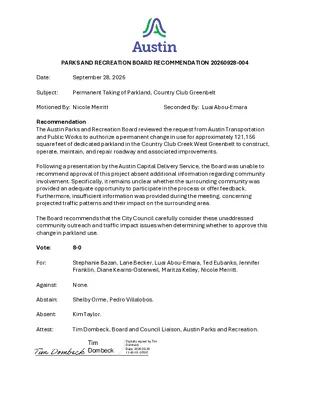
PARKS AND RECREATION BOARD RECOMMENDATION 20260928-004 Date: September 28, 2026 Subject: Permanent Taking of Parkland, Country Club Greenbelt Motioned By: Nicole Merritt Seconded By: Luai Abou-Emara Recommendation The Austin Parks and Recreation Board reviewed the request from Austin Transportation and Public Works to authorize a permanent change in use for approximately 121,156 square feet of dedicated parkland in the Country Club Creek West Greenbelt to construct, operate, maintain, and repair roadway and associated improvements. Following a presentation by the Austin Capital Delivery Service, the Board was unable to recommend approval of this project absent additional information regarding community involvement. Specifically, it remains unclear whether the surrounding community was provided an adequate opportunity to participate in the process or offer feedback. Furthermore, insufficient information was provided during the meeting, concerning projected traffic patterns and their impact on the surrounding area. The Board recommends that the City Council carefully consider these unaddressed community outreach and traffic impact issues when determining whether to approve this change in parkland use. Vote: 8-0 For: Stephanie Bazan, Lane Becker, Luai Abou-Emara, Ted Eubanks, Jennifer Franklin, Diane Kearns-Osterweil, Maritza Kelley, Nicole Merritt. Against: None. Abstain: Shelby Orme, Pedro Villalobos. Absent: Kim Taylor. Attest: Tim Dombeck, Board and Council Liaison, Austin Parks and Recreation.
PARKS AND RECREATION BOARD MEETING MINUTES AUGUST 24, 2026 PARKS AND RECREATION BOARD REGULAR MEETING MINUTES AUGUST 24, 2026 The PARKS AND RECREATION BOARD convened in a REGULAR meeting on AUGUST 24, 2026 at 301 W 2nd Street in Austin, Texas. Chair Bazan called the PARKS AND RECREATION BOARD Meeting to order at 6:06 p.m. Board Members in Attendance: Stephanie Bazan, Lane Becker, Ted Eubanks, Jennifer Franklin, Nicole Merritt, Maritza Kelley, Pedro Villalobos. Board Members in Attendance Remotely: Diane Kearns-Osterweil, Shelby Orme. Board Members Absent: Luai Abou-Emara, Kim Taylor. PUBLIC COMMUNICATION: GENERAL Lester Tanquilut - Adult Recreation Leagues Julie Fisher - Austin Parks Foundation Haleigh Wagman - Adult Recreation Leagues Aubrea Rudder - Austin Rowing Club Patrick Beyer - Austin Parks Foundation Patricia Bobeck - Barton Springs fishhooks and lures Sam Fox - Adult Recreation Leagues Steven Brown - Givens Park Work Group APPROVAL OF MINUTES 1. Approve the minutes of the Parks and Recreation Board regular meeting of July 27, 2026. The motion to approve the minutes of the Parks and Recreation Board regular meeting of July 27, 2026 was approved on Board Member Villalobos’ motion, Vice Chair Becker’s second on a 9-0 vote. Board Members Abou-Emara and Taylor absent. DISCUSSION AND ACTION ITEMS 2. Presentation, discussion and approve letters of support for the Parks Rx program which seeks to create positive developmental, physical and mental health outcomes through exposing children to nature. Christa McCarthy, Centralized Programs Division Manager, Austin Parks and Recreation; Marybeth Wootan-Holst, MD and Sam Williams, DO MBA, Chief Residents, UT Austin Dell Medical School Pediatric Residency Program gave a presentation and answered Page 1 of 3 PARKS AND RECREATION BOARD MEETING MINUTES AUGUST 24, 2026 questions on the location of the residents clinic, and potential future partnerships with Pflugerville Parks and Recreation. The motion to approve letters of support for the Parks Rx program which seeks to create positive developmental, physical and mental health outcomes through exposing children to nature was approved on Board Member Merritt’s motion, Board Member Franklin’s second on a 9-0 vote. Board Members Abou-Emara and Taylor absent. 3. Discussion and approve an appointment to the Parks and Recreation Board’s seat on the Joint Sustainability Committee. Board Members discussed the purpose of the JSC. This item was tabled by the Chair. 4. Discussion and amend the 2026 Parks and Recreation Board annual meeting schedule to move the regular scheduled meeting on November …
Parks Bond Development Austin Parks and Recreation Department | September 28, 2026 Liana Kallivoka, PhD, PE, LEED Fellow, Assistant Director Alyssa Tharrett, RA, NCARB, Project Management Supervisor 2018 Bond Proposition C Spending Prop C spending nearing 90% 90% 2 2018 Bond Proposition C Status Aquatics 38.3 1.5 0.2 Parkland Acquisition 41.7 2.5 0.6 0.2 Park Improvements 14.5 1.3 6.0 3.1 Building Renovations 14.8 2.0 1.8 2.9 Infrastructure 15.5 0.2 0.9 0.8 0 5 10 15 20 25 30 35 40 45 50 Expenses Under Contract Assigned to Projects Unassigned/Program Contingency Spending as of September 9, 2026 3 2026 Bond Development Schedule Spring 2024 Summer 2024 Fall 2024 Winter 2024 / 2025 Spring 2025 Departments Develop Universe of project needs Bond Development Kickoff Bond Election Advisory Task Force Creation Community Engagement Technical Criteria Development Staff & SME Project Prioritization PARB Presentation Summer 2025 Fall 2025 Winter 2025 / 2026 Community Engagement Spring 2026 Summer 2026 Fall 2026 Project Scoping and Cost Estimates Council Evaluation and Adoption Evaluation of Operating Cost Impacts Staff Presentations to BEATF Initial Staff Bond Recommendation PARB Presentation Open House Events Staff and BEATF Final Bond Recommendations Bond Election 4 Universe of Project Needs 5 Supplemental Technical Criteria & Scoring For programs not already prioritized in existing studies Percentage Technical Criteria Description 30% Social Equity 25% Proactive Reinvestment 20% Sustainability & Resilience 15% Leveraging Funds and Partnership Opportunities 10% Strategic Direction 100% Total Population served, Income of service area, People of color served, children served Site/Building condition, Safety, Maintenance Costs, Reinvestment, Facility Usage, accessibility Green infrastructure, resilience networks, sustainable design, energy efficiency, water usage Ability to utilize matching funds from alternative sources such as grants, donations, partners, historic preservation fund, other city departments, etc. Project aligns with existing city plans, APR Long Range Plan, APR vision plans, etc. 6 Park Bond Funding Journey Initial APR Staff Recommendation $410 M $149M, 2018 Parks Bond Prop C Council Sub- Quorum Initial Recommendation $250 M $181 M Final CDS Staff Recommendation $260 M Council Approved Proposition A BEATF Recommendation $175 M $140 M Initial CDS Staff Recommendation Jul-25 Aug-25 Sep-25 Oct-25 Nov-25 Dec-25 Jan-26 Feb-26 Mar-26 Apr-26 May-26 Jun-26 Jul-26 Aug-26 7 Austin Parks and Recreation $260M Council Approved Bond: Proposition A Program Name $260M Scenario (without maintenance facilities) Building, Recreation, and Senior Center Improvements* $65.5M Funding for renovations/rehabilitation and additions of existing Parks and Recreation facilities, recreation and senior centers, …
CHAPTER 26 APPLICATION IH-35 CAPITAL EXPRESS CENTRAL IMPROVEMENTS REQUESTED PARKLAND DECLARATIONS OF USE Hancock Golf Course Austin Parks & Recreation Board September 2026 Mark Stanko, Project Manager, WSP Kevin Koeller, P.E. A D N E G A 1. Project Summary 2. Project Objectives 3. Stakeholder Engagement • Bi-weekly meetings • On-site meeting • Public Involvement (PI) interagency meeting • Community engagement 4. Parkland Declaration of Use • Hancock Golf Course / Recreation Center – East 41st and Peck Ave • Temporary Construction Declaration of Use • Scope of Parkland use • Alternatives Assessment 5. Summary of Requested Parkland Declaration of Use WSP | CAPEX Chapter 26 Application | September 2026 2 1. Project summary The Capital Expressway Austin Water Standalone Utility Project (CAPEX-AWS) requires relocation of over 45,000 linear feet of water and wastewater utilities to mitigate conflicts with the proposed improvements to IH-35 by the Texas Department of Transportation (TxDOT). These relocations are primarily in City of Austin right-of-way (ROW) but some work on private property and parkland is required. WSP | CAPEX Chapter 26 Application | September 2026 Proposed Water and Wastewater lines for the CAPEX AWS project 3 2. Project Objectives • Improve safety and mobility in Austin • Provide Austin Water customers with a reliable water and wastewater system that is accessible • Relocate water and wastewater lines impacted by proposed IH-35 CapEx Project WSP | CAPEX Chapter 26 Application | September 2026 4 3. Stakeholder Engagement Meetings held to date: ▪ Bi-weekly meetings Austin Parks and Recreation (APR), Austin Water (AW) and TxDOT ▪ An on-site meeting with APR, AW, Hancock Golf Course representatives and TxDOT for the Comal Street, Hancock Recreation Center and East Avenue Declaration of Use areas on May 29, 2026. ▪ Public Involvement (PI) interagency meeting on Wednesday, July 29, 2026, with AW, APR and TxDOT. WSP | CAPEX Chapter 26 Application | September 2026 5 SUMMARY OF STAKEHOLDER ENGAGEMENT EFFORTS April 2026 Onwards • Email correspondence between TxDOT, Austin Water, City of Austin APR, Forestry and other city departments relating to the proposed use of Hancock Golf Course and other parkland. July 2026 • Elected officials, stakeholder organizations and neighborhood associations were notified about the project and parkland use by email during the week of July 27. • Property owners near and around the affected areas received mailed notification letters during the same week. August 2026 • On Thursday, …

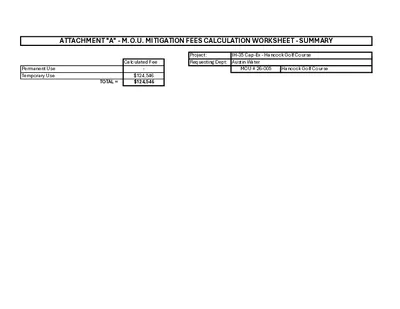
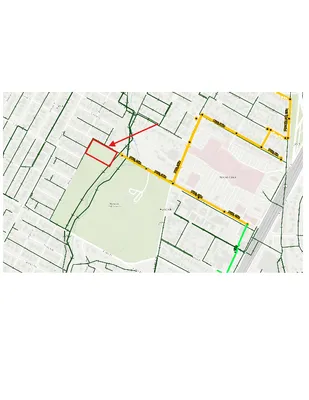
To: From: Date: Subject: MEMORANDUM OF UNDERSTANDING Shay Ralls Roalson, P.E., Director, Austin Water Jesús Aguirre, MBA, CPRE, Director, Austin Parks and Recreation Department [Month Day, Year] IH-35 Cap Ex Hancock Golf Course; M.O.U. #26-005; FDU# 3960 2207 8478, 4570 2307 5486; Project I.D. 3212.203 The purpose of this memorandum is to outline an understanding between Austin Parks and Recreation (APR) and Austin Water (AW) for the non-recreational use of parkland at Hancock Golf Course. Project Details AW is allowed to use the parkland located at Hancock Golf Course, street address as part of the work site for the above referenced project, as indicated in Attachment “B” (Location Map). The parkland is to be used for temporary staging of construction equipment and materials associated with the TXDOT IH35 CapEx Downtown Advanced Construction (DTAC) AW Standalone Relocations: MLK to Holly Street Project. The requested area and corresponding mitigation amount, as indicated in Attachment “A” is: Temporary Staging Use: 9,482 sq. ft. = $124,546 In addition to the costs associated with the use of parkland, AW will provide funding for site preparation of parkland for the temporary use and restoration upon project completion. The following work will be completed by APR with funding provided in advance by AW. Sunken Cost of Existing Trees: Site Prep and Restoration: Transplant Existing Trees: Replant Trees following Project Completion: $9,223 $29,097 $10,402 $14,947 APR’s restoration of the site only includes re-establishment of Tee #7. All other restoration efforts are the responsibility of AW with APR approval and final inspection. Page 1 of 3 Subject: Sample Subject Total Mitigation Fees to be transferred to APR: $188,215. The estimated project start date: May 1st, 2027 The approved duration of the parkland use: 549 Calendar Days. Estimated date of parkland open for public use pending completed restoration and approval by Environmental Inspector and APR: October 31, 2028 Requesting Department Responsibilities This MOU and associated Declaration of Use are necessitated by TxDOT’s IH-35 expansion project. The terms established in this MOU between AW and APR have been reviewed by TxDOT. All construction work on parkland will be executed by TxDOT’s contractors and construction documents will include language agreed to by TxDOT and COA. The City of Austin (COA) will make every effort to coordinate and enforce the terms of this MOU with TxDOT and their designated contractors. APR will continue to coordinate directly with TxDOT regarding these activities, recognizing that …

ATTACHMENT "A" - M.O.U. MITIGATION FEES CALCULATION WORKSHEET - SUMMARY Permanent Use Temporary Use Calculated Fee - $124,546 $124,546 TOTAL = Project: Requesting Dept: IH-35 Cap-Ex - Hancock Golf Course Austin Water MOU # 26-005 Hancock Golf Course Mitigation Worksheet for Temporary Use Project: IH-35 Cap-Ex - Hancock Golf Course Requesting Department: Austin Water MOU # 26-005 Hancock Golf Course Geographic Area Code 4 Identified by requested area geography Average Value per Square Foot. ($): $57.42 Calculated by Geographic Area average Requested Area (sq. ft.): 9,482 Submitted by Requesting Department/Entity Preliminary Annual Value of Requested Area: $544,462 Area requested multiplied by Value per Square Foot Adjusted Annual Value of Requested Area: $81,669 (15% Rate of Return) Monthly Annual Value of Requested Area: $6,806 Adjusted Annual Value divided by 12 Daily Temporary Use Rate: $227 Monthly Value divided by 30 (average number of days in a month) Days Requested: 549 Submitted by Requesting Department/Entity Temporary Use Mitigation Value: $124,546 Daily Temporary Use Rate multiplied by Days Requested REV. 04/06/17 Prepared By APR Golf Date Created 8/11/2026 Date Revised 8/11/2026 PROJECT BUDGET ESTIMATE Project Name Department Hancock Golf Course - AW/TXDOT Restoration: Golf Austin Parks & Recreation QTY Pre Project State 10 1 Sprinkler Head Cap and Removal Close Loop for Irrigation on #8 Green Post Project Completion 10 4000 4000 1 4000 1 Sprinkler Head Reinstall and Programming Rough Grade teeing area #7 (Sq Ft) Fine Grade area to include soil prep and add chocolate loam #7 (SqFt) Open Loop for Irrifation on #8 Green Sod Install on #7 Tee & Surrounds (SqFt) Mobilization *Price does not include restoration of anything other than #7 Tee for sod prep and install. This will be the responsibility of TxDot with owner approval and inspection. $2,500.00 $19,960.00 Unit Price Total $150 $1,000 $400 $0.90 $0.44 $1,000 $1.15 $5,000 $1,500 $1,000 $4,000 $3,600 $1,760 $1,000 $4,600 $5,000 10% per year Cost Escalation $23,952.00 PROJECT SUB-TOTAL COST CONTINGENCY (Based on project risk analysis) Risk Probability % 10.00% T O T A L P R O J E C T B U D G E T E S T I M A T E $26,452.00 $2,645.20 $29,097 Printed on: 9/14/2026 @ 10:31 AM Page 1 of 4 REV. 04/06/17 Prepared By APR Forestry Date Created 8/11/2026 Date Revised 8/11/2026 PROJECT BUDGET ESTIMATE Project Name Hancock Golf Course - AW/TXDOT Restoration: Trees Department Austin Parks & Recreation Time …
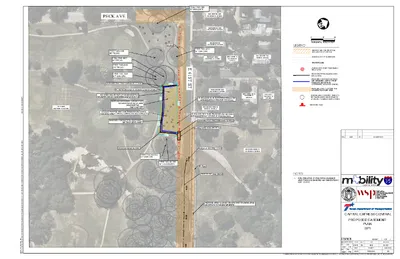
PECK AVE DORAN CHRISTOPHER & AMY TCAD PROPERTY ID: 0219080110 BAKIR BEVERLY RAE CLARK TCAD PROPERTY ID: 0219080109 EX ROW TREISMAN PHILIP URI TCAD PROPERTY ID: 0219080108 BRICKER DAVID CHARLES TCAD PROPERTY ID: 0219080107 HARRIS COURTNEY LEE TCAD PROPERTY ID: 0219080106 BIGGS FAMILY TRUST TCAD PROPERTY ID: 0219080105 SIGN DIRECTING TRAIL USERS BACK TO TRAIL 53.2' EX TEEING GROUNDS TO BE REINSTATED BY OTHERS SOUTHERN DECLARATION OF USE BOUNDARY IS THE NORTH SIDE OF THE EXISTING GOLF CART PATH PROPOSED TEMPORARY CONSTRUCTION DECLARATION OF USE (01-AWB) DOCUMENT NO. _____ AREA 9,480 SQFT EX NEWLY PLANTED TREE TO BE TRANSPLANTED OFFSITE AND REPLANTED AT PROJECT COMPLETION BY OTHERS (TYP.) PROPOSED CONSTRUCTION FENCE LIMITS, SEE TRACK DETAIL SHEET ' 8 . 2 9 ' 8 . 7 6 63.1' E 4 1 S T S T ' 3 . 3 7 1 WRIGHT JOHN LIVING TRUST TCAD PROPERTY ID: 0219080223 EX BOULDERS TO BE TEMPORARILY RELOCATED AND REPLACED AS REQUIRED FOR ACCESS SMITH TOWNSEND CARY JR TCAD PROPERTY ID: 0219080224 ALONSO PEDRO F TCAD PROPERTY ID: 0219080225 NOKES MARY ELLEN WREN TCAD PROPERTY ID: 0219080222 EX WALKING PATH TO BE RELOCATED AND RESTORED IN THIS LOCATION AT THE END OF CONSTRUCTION SIGN DIRECTING TRAIL USERS BACK TO TRAIL EX BRICK GATE TO BE PROTECTED PROPOSED WALKING PATH PROP 30" PVC WWL_200.04 4100 RED RIVER HOLDINGS LLC TCAD PROPERTY ID: 0219081201 0 VERTICAL SCALE IN FEET 40 80 HORIZONTAL SCALE IN FEET LEGEND PROPOPOSED CONSTRUCTION DECLARATION OF USE COA EXISTING CITY OF AUSTIN ROW PROPERTY LINE EX BOULDERS TO BE TEMPORARILY RELOCATED PROPOSED 8FT DG WALKING PATH RELOCATION PROPOSED CONSTRUCTION FENCE AND SCREENING LIMITS (TYPE OF FENCING TO BE FURTHER COORDINATED WITH GOLF COURSE) PROPOSED STREET CLOSURE FOR CONSTRUCTION WORK ZONE EXISTING NEWLY PLANTED TREES TO BE TRANSPLANTED AND REPLANTED AT PROJECT COMPLETION BY OTHERS PROPOSED SIGN 0 0 0 0 + + 0 0 1 1 EX ROW PROP 24" PVC WWL_200.04 NOTES 1. PARK IRRIGATION SYSTEM WITHIN EASEMENT AREA TO BE DISCONNECTED AND REINSTATED BY GOLF COURSE. PROPOSED STREET CLOSURE FOR CONSTRUCTION WORK ZONE, NO IMPACTS TO THE GOLF DRIVEWAY 0 0 0 0 + + 1 1 1 1 CL CL 0 0 0 0 + + 2 2 1 1 CL CL 0 0 0 0 + + 3 3 1 1 REV DATE BY DESCRIPTION CAPITAL AREA WSP USA Inc 1601 S MoPac Expy, Suite 325 Austin, TX …
REV. 04/06/17 Prepared By APR Forestry Date Created 8/11/2026 Date Revised 8/11/2026 PROJECT BUDGET ESTIMATE Project Name Hancock Golf Course - AW/TXDOT Restoration: Trees Department Austin Parks & Recreation Time (hrs) Frequency Occurrence Staff Rate/Unit Price Total QTY Staff Hours Planning Establishment Materials 14 14 14 14 Tree Stock Mulch T-posts Ties PROJECT SUB-TOTAL Site Selection Mapping Site Vetting Procurement Planting 4 8 4 8 8 Site checks Hand watering Re-mulching Re-tying 8 (Monthly) 8 (Quarterly) 16 (Biannually) 8 (Quarterly) 20 6 3 6 14 Trees impacted of original 148 (10%) Planted December 2024, 20 months elapsed since Supervising Horticulturalist Forester Crew Lead Crew Crew Lead + Crew Full Team $40 $35 $30 $125 $155 $230 $40 $40 $40 $40 $230 $155 $155 $155 $155 10% Modifier $115.55 $7.34 $23.94 $0.18 $160.00 $320.00 $160.00 $320.00 $1,840.00 $2,480.00 $744.00 $744.00 $744.00 $1,617.70 $102.76 $335.16 $2.52 COST CONTINGENCY (Based on project risk analysis) Risk Probability % 10.00% T O T A L P R O J E C T B U D G E T E S T I M A T E $2,800.00 $4,712.00 $2,058.14 $9,570.14 $957.01 $10,527.15 Printed on: 8/20/2026 @ 3:10 PM Page 1 of 2 Prepared By APR Golf Date Created 8/11/2026 Date Revised 8/11/2026 PROJECT BUDGET ESTIMATE Hancock Golf Course - AW/TXDOT Restoration: Golf Austin Parks & Recreation REV. 04/06/17 Project Name Department QTY Pre Project State 10 1 Sprinkler Head Cap and Removal Close Loop for Irrigation on #8 Green Post Project Completion 10 4000 4000 1 4000 1 Sprinkler Head Reinstall and Programming Rough Grade teeing area #7 (Sq Ft) Fine Grade area to include soil prep and add chocolate loam #7 (SqFt) Open Loop for Irrifation on #8 Green Sod Install on #7 Tee & Surrounds (SqFt) Mobilization *Price does not include restoration of anything other than #7 Tee for sod prep and install. This will be the responsibility of TxDot with owner approval and inspection. $2,500.00 $19,960.00 Unit Price Total $150 $1,000 $400 $0.90 $0.44 $1,000 $1.15 $5,000 $1,500 $1,000 $4,000 $3,600 $1,760 $1,000 $4,600 $5,000 10% per year Cost Escalation $23,952.00 PROJECT SUB-TOTAL COST CONTINGENCY (Based on project risk analysis) Risk Probability % 10.00% T O T A L P R O J E C T B U D G E T E S T I M A T E $26,452.00 $2,645.20 $29,097.20 Printed on: 8/20/2026 @ 3:10 PM Page 2 of …
Chapter 26 Application Chapter 26 Application South Pleasant Valley Road South Pleasant Valley Road Trailhead to Burleson Road Trailhead to Burleson Road City of Austin Capital Delivery Services | CIP ID# 11898.002 Presentation to the Parks and Recreation Board Meeting | September 28, 2026 Agenda Project Summary Project Location Existing Conditions Project Improvements Chapter 26 Requirements Alternatives Considered Stakeholder Engagement Timeline Summary Questions 2 Project Summary Voters approved this project as part of the 2020 Mobility Bond, recognizing the need to improve disconnected corridors and invest in safer, more reliable travel options across Southeast Austin. The project advances the goals of the Austin Strategic Mobility Plan and Imagine Austin by enhancing transportation choices, supporting future transit, and improving access to neighborhoods, parks, and schools. The project closes an existing transportation gap of approximately 970 ft in length between South Pleasant Valley Road and Burleson Road. The new roadway will improve multimodal connectivity and safety for all users. The new four-lane roadway includes: 10.5 to 12.5-foot travel lanes w/14-foot grass medians sidewalks, and 12-ft Shared-Use Paths ADA-compliant curb ramps Traffic signal at Burleson Road and South Pleasant Valley Road Illumination Storm sewer system New Austin Energy compatible Trees The project will affect approximately 5 acres within the construction limits. 3 Project Location Council District 3 Mabel Davis District Park Country Club Creek Greenbelt 4 Existing Conditions Existing Pedestrian Crossing Existing 10-ft Shared-Use Path Existing Sidewalks Existing Cul-de-sac APR Property Existing Trail Path 5 Existing 10-ft Shared-use Path Existing Kiosk To be relocated and restored 6 Existing 10-ft Shared-Use Path Austin Energy Transmission Line to Remain Existing Trail Path 7 Project Improvements Existing Parkland Boundary Country Club Creek Greenbelt Country Club Creek Greenbelt 8 Chapter 26 Requirements TX Pks & Wildlife Code § 26.001 (2025) 10 Parkland Use Area Total Parcel Acreage 2,223,738 square feet of parkland Permanent Use 121,156 square feet of parkland APR Parcel Remaining 2,102,582 square feet of parkland Park Improvements $107,735 Mitigation Cost $1,368,050 11 APR Remaining Parcel – 2,102,582 sf Alternatives Considered • Alignment A – Preferred Alternative • Follows an existing utility corridor along the Country Club Creek Trail (720 ft) • Minimizes impacts to parkland, trees, and nearby properties by • using an already-disturbed area. Provides the safest …

To: From: Date: Subject: MEMORANDUM OF UNDERSTANDING Richard Mendoza, PE, Director, Austin Transportation and Public Works Jesús Aguirre, MBA, CPRE, Director, Austin Parks and Recreation Department [Month Day, Year] South Pleasant Valley Rd Trail Head to Burleson Rd: M.O.U.#26-004; FDU# 820B-2507-D910; Project I.D. 11898 The purpose of this memorandum is to outline an understanding between Austin Parks and Recreation (APR) and Austin Transportation and Public Works (ATPW) for the non-recreational use of parkland at Country Club Creek West Greenbelt. Project Details ATPW is allowed to use the parkland located at Country Club Creek West Greenbelt, 3109 Burleson Rd, as part of the work site for the above referenced project, as indicated in Attachment “B” (Location Map). The parkland is to be used for right of way and associated improvements. The requested area(s) and corresponding mitigation amounts, as indicated in Attachment “A” (is/are): Permanent Right of Way Use: 121,156 sq. ft. = $1,475,787 ATPW agrees to provide the following park improvements concurrent with the transportation project. Park Improvements Bike Trail Connection Earthwork Shared Use Path (West of Burleson) Bike Trail Connection Path Kiosk Restoration Custom Trail Sign Quantity 457 180 2,640 1 1 Value of Proposed Park Improvements to be deducted from the mitigation: $107,735 Total Mitigation Fees to be transferred to APR: $1,368,050. Page 1 of 3 Subject: South Pleasant Valley Rd Trail Head to Burleson Rd: M.O.U.#26-004; FDU# 820B-2507-D910; Project I.D. 11898 The estimated project start date is: May 2027 The approved duration of the parkland use is 365 Calendar Days. Estimated date of parkland open for public use pending completed restoration and approval by Environmental Inspector and APR; is: May 2028 Requesting Department Responsibilities ATPW will remove, store, and replace existing trail head kiosk sign at a location approved by APR. ATPW will ensure adequate detour of the Country Club Creek Urban Trail when safe and practical as approved in the Traffic Control Plan (Attachment C). Any deviation from the pre-approved plans must be requested in writing and approved by APR before implementation. Informative signage must be placed on-site seven days prior to start of detour. APR reserves the right to request modification of detour conditions at any time to protect public safety and access. Areas needed for temporary access and workspace west of Burleson may only be used to construct and install park improvements. It is the responsibility of the ATPW Project Manager and/or a Capital Delivery …

ATTACHMENT "A" - M.O.U. MITIGATION FEES CALCULATION WORKSHEET - SUMMARY Permanent Use - Unencumbered ROW Permanent Use - Encumbered ROW Permanent Use - SUP and Bike Trail Permanent Use - Surface Drainage Permanent Use - Subsurface Drainage Credit For Park Improvements SUBTOTAL = TOTAL = Calculated Fee $1,133,639 $103,697 $0 $187,681 $50,771 $1,475,787 $107,737 $1,368,050 Project: Requesting Dept ATPW - S Pleasant Valley Corridor Gap Austin Transportation and Public Works MOU #26-004 Country Club Creek West Greenbelt ATTACHMENT "A" - M.O.U. MITIGATION FEES CALCULATION WORKSHEET Permanent Use Project: Requesting Department: ATPW - S Pleasant Valley Corridor Gap Austin Transportation and Public Works MOU #26-004 Country Club Creek West Greenbelt Geographic Area Code 9 Identified by requested area site geography Average Value per Square Foot. ($): $25.18 Calculated by MLS Area geography's average Requested Area (sq. ft.): 45,030 Submitted by Requesting Department/Entity Preliminary Mitigation Value ($): $1,133,639 Requested Area multiplied by the Value per Square Foot Disturbance Value (%): 100.00% Based on limitations on future development for that portion of parkland (see table below) Park Use Factor (%): 0.00% Based on the recreational or park value of the proposed use. Final Mitigation Value ($): $1,133,639 Preliminary Mitigation Value multiplied by the Disturbance Value Percentage of Fee 10% Comments Nominal effect on use and utility Example Uses Small subsurface water or sewer line DISTURBANCE VALUES 25% 35% 50% 65% 75% 90% 100% Subsurface or air rights that have minimal effect on use and utility Location along a property line or non usable land area Balanced use by both owner and easement holder Some impact on surface use and conveyance of ingress/egress rights Major impact on surface use and conveyance of future uses Severe impact on surface use and conveyance of future uses Permanently dedicated to installation Larger subsurface water or sewer line with minimal impacts on future development Water or sewer line, cable lines or other subsurface use with limited impacts on developable area Water or sewer line, cable lines with exceptions in the DOU allowing parklike amenities Pipelines or other limited surface impacts with maintenance requirements and limited development potential Pipelines, drainage easements, flowage easements that restrict future use Overhead electric, drainage easements, or other use with restrictions on future use ROW or other use with surface impact on parkland Areas within an existing easement or declaration of use are capped at the maxmimum remaining eligible percentage. Adapted From: Right of …
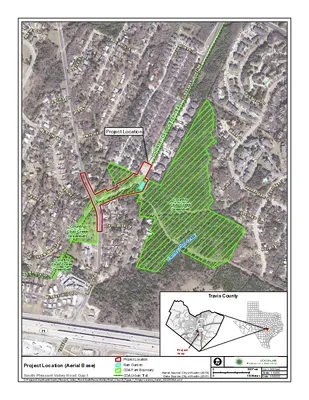
Huntwick Dr Elana Ct Ari Ct Rivka Cv ridgeDr Wickersham Ln n u S Sunridge Ct Dr Allison !. !. vesCir e e R t S s gla Dou Catalina Dr Dr n to Prince MetcalfeRd Ware Rd Project Location BenjaminSt sCreekDr ollin C d y R alle nt V a s a S Ple AIL R K T E E R B C U L Y C R T N U O C GranadaDr M Dr a n u g a L atador Dr Country Club Creek Greenbelt Country Club Creek Greenbelt Te rrila nce Dr Dr a Monic Santa Country Club Creek Greenbelt Ventura Dr Mission Hill Dr ST71 n L d d o T d R n o s le r u B !. !. !. !. !. Creek Club Country UV71 UV275 UV169UV111 UV360 ^_UV1 Project Area !. !. Travis County !. !. !. !. !. !. !. !. Project Location (Aerial Base) Project Location Rain Garden South Pleasant Valley Road Gap 1 G:\Projects\CityofAustin\South_Pleasant_Valley_Road\SouthPleasantValleyRoad_Chap26_Figure 1_Project Location_Aerial_20220106LA.mxd !. COA Park Boundary !. COA Urban Trail Aerial Source: City of Austin (2019) Data Source: City of Austin (2021) !. !. !. !. !. !. !. !. !. !. !. !. !. !. I 0 0 !. !. !. !. !. !. !. !. !. !. !. !. !. !. !. !. !. !. !. !. !. !. !. !. !. !. !. !. !. !. !. !. !. !. 500 Feet 150 Meters 1 in = 500 feet Scale: 1:6,000 Date: 1/6/2022 !. !. !. !. !.
SHEET NUMBER SUBSHEET SHEET TITLE SHEET LIST TABLE TC-01 TC-02 TC-03 TC-04 TC-04A TC-04B TC-05 TC-05A TC-05B TC-06 TC-06A TC-06B TC-07 TC-07A TC-08 TC-08A TC-09 TC-09A TC-09B TC-10 TC-10A TC-10B TRAFFIC CONTROL PLAN TRAFFIC CONTROL PLAN TRAFFIC CONTROL PLAN TRAFFIC CONTROL PLAN TRAFFIC CONTROL PLAN TRAFFIC CONTROL PLAN TRAFFIC CONTROL PLAN TRAFFIC CONTROL PLAN TRAFFIC CONTROL PLAN TRAFFIC CONTROL PLAN TRAFFIC CONTROL PLAN TRAFFIC CONTROL PLAN TRAFFIC CONTROL PLAN TRAFFIC CONTROL PLAN TRAFFIC CONTROL PLAN TRAFFIC CONTROL PLAN TRAFFIC CONTROL PLAN TRAFFIC CONTROL PLAN TRAFFIC CONTROL PLAN TRAFFIC CONTROL PLAN TRAFFIC CONTROL PLAN TRAFFIC CONTROL PLAN SHEET INDEX AND BARRICADING SUMMARY TRAFFIC CONTROL NOTES WORK PHASING AND SEQUENCING NOTES BURLESON RD MEDIAN (PHASE 1A) (1 OF 3) BURLESON RD MEDIAN (PHASE 1A) (2 OF 3) BURLESON RD MEDIAN (PHASE 1A) (3 OF 3) BURLESON RD MEDIAN (PHASE 1B) (1 OF 3) BURLESON RD MEDIAN (PHASE 1B) (2 OF 3) BURLESON RD MEDIAN (PHASE 1B) (3 OF 3) S PLEASANT VALLEY RD (PHASE 2) BURLESON RD (PHASE 2) (1 OF 2) BURLESON RD (PHASE 2) (2 OF 2) BURLESON RD SUP (PHASE 2A) (1 OF 2) BURLESON RD SUP (PHASE 2A) (2 OF 2) BURLESON RD SUP (PHASE 2B) (1 OF 2) BURLESON RD SUP (PHASE 2B (2 OF 2) S PLEASANT VALLEY RD (PHASE 3) BURLESON RD (PHASE 3) (1 OF 2) BURLESON RD (PHASE 3) (2 OF 2) S PLEASANT VALLEY RD (PHASE 4) BURLESON RD (PHASE 4) (1 OF 2) BURLESON RD (PHASE 4) (2 OF 2) TC-11 TC-11A TC-12 TC-12A TC-13 TC-13A TC-13B TC-14 TC-15 TC-16 TC-16A TC-16B TC-16C TC-16D TC-16E TC-16F TC-16G TC-17 TC-18 TC-19 TC-20 TRAFFIC CONTROL PLAN TRAFFIC CONTROL PLAN TRAFFIC CONTROL PLAN TRAFFIC CONTROL PLAN TRAFFIC CONTROL PLAN TRAFFIC CONTROL PLAN BURLESON RD SUP (PHASE 5) (1 OF 2) BURLESON RD SUP (PHASE 5) (2 OF 2) BURLESON RD SUP (PHASE 6) (1 OF 2) BURLESON RD SUP (PHASE 6) (2 OF 2) BURLESON RD SUP (PHASE 7) (1 OF 2) BURLESON RD SUP (PHASE 7) (2 OF 2) TRAFFIC CONTROL PLAN SEAL COAT FLAGGING OPERATIONS REFERENCE HVJ TYPICAL DETAIL HVJ TYPICAL DETAIL TEMPORARY MEDIAN REFUGE ISLAND SETUP 2-WAY FLAGGING OPERATION WITH BIKE LANES HVJ TYPICAL DETAIL 2-WAY FLAGGING OPERATION WITH BIKE AND PARKING LANES HVJ TYPICAL DETAIL HVJ TYPICAL DETAIL HVJ TYPICAL DETAIL HVJ TYPICAL DETAIL HVJ TYPICAL DETAIL HVJ TYPICAL DETAIL HVJ TYPICAL DETAIL HVJ TYPICAL DETAIL 3-WAY FLAGGING OPERATION WITH …
SHEET NUMBER SUBSHEET SHEET TITLE SHEET LIST TABLE TC-01 TC-02 TC-03 TC-04 TC-04A TC-04B TC-05 TC-05A TC-05B TC-06 TC-06A TC-06B TC-07 TC-07A TC-08 TC-08A TC-09 TC-09A TC-09B TC-10 TC-10A TC-10B TRAFFIC CONTROL PLAN TRAFFIC CONTROL PLAN TRAFFIC CONTROL PLAN TRAFFIC CONTROL PLAN TRAFFIC CONTROL PLAN TRAFFIC CONTROL PLAN TRAFFIC CONTROL PLAN TRAFFIC CONTROL PLAN TRAFFIC CONTROL PLAN TRAFFIC CONTROL PLAN TRAFFIC CONTROL PLAN TRAFFIC CONTROL PLAN TRAFFIC CONTROL PLAN TRAFFIC CONTROL PLAN TRAFFIC CONTROL PLAN TRAFFIC CONTROL PLAN TRAFFIC CONTROL PLAN TRAFFIC CONTROL PLAN TRAFFIC CONTROL PLAN TRAFFIC CONTROL PLAN TRAFFIC CONTROL PLAN TRAFFIC CONTROL PLAN SHEET INDEX AND BARRICADING SUMMARY TRAFFIC CONTROL NOTES WORK PHASING AND SEQUENCING NOTES BURLESON RD MEDIAN (PHASE 1A) (1 OF 3) BURLESON RD MEDIAN (PHASE 1A) (2 OF 3) BURLESON RD MEDIAN (PHASE 1A) (3 OF 3) BURLESON RD MEDIAN (PHASE 1B) (1 OF 3) BURLESON RD MEDIAN (PHASE 1B) (2 OF 3) BURLESON RD MEDIAN (PHASE 1B) (3 OF 3) S PLEASANT VALLEY RD (PHASE 2) BURLESON RD (PHASE 2) (1 OF 2) BURLESON RD (PHASE 2) (2 OF 2) BURLESON RD SUP (PHASE 2A) (1 OF 2) BURLESON RD SUP (PHASE 2A) (2 OF 2) BURLESON RD SUP (PHASE 2B) (1 OF 2) BURLESON RD SUP (PHASE 2B (2 OF 2) S PLEASANT VALLEY RD (PHASE 3) BURLESON RD (PHASE 3) (1 OF 2) BURLESON RD (PHASE 3) (2 OF 2) S PLEASANT VALLEY RD (PHASE 4) BURLESON RD (PHASE 4) (1 OF 2) BURLESON RD (PHASE 4) (2 OF 2) TC-11 TC-11A TC-12 TC-12A TC-13 TC-13A TC-13B TC-14 TC-15 TC-16 TC-16A TC-16B TC-16C TC-16D TC-16E TC-16F TC-16G TC-17 TC-18 TC-19 TC-20 TRAFFIC CONTROL PLAN TRAFFIC CONTROL PLAN TRAFFIC CONTROL PLAN TRAFFIC CONTROL PLAN TRAFFIC CONTROL PLAN TRAFFIC CONTROL PLAN BURLESON RD SUP (PHASE 5) (1 OF 2) BURLESON RD SUP (PHASE 5) (2 OF 2) BURLESON RD SUP (PHASE 6) (1 OF 2) BURLESON RD SUP (PHASE 6) (2 OF 2) BURLESON RD SUP (PHASE 7) (1 OF 2) BURLESON RD SUP (PHASE 7) (2 OF 2) TRAFFIC CONTROL PLAN SEAL COAT FLAGGING OPERATIONS REFERENCE HVJ TYPICAL DETAIL HVJ TYPICAL DETAIL TEMPORARY MEDIAN REFUGE ISLAND SETUP 2-WAY FLAGGING OPERATION WITH BIKE LANES HVJ TYPICAL DETAIL 2-WAY FLAGGING OPERATION WITH BIKE AND PARKING LANES HVJ TYPICAL DETAIL HVJ TYPICAL DETAIL HVJ TYPICAL DETAIL HVJ TYPICAL DETAIL HVJ TYPICAL DETAIL HVJ TYPICAL DETAIL HVJ TYPICAL DETAIL HVJ TYPICAL DETAIL 3-WAY FLAGGING OPERATION WITH …
AUSTIN PARKS AND RECREATION DIRECTOR’S UPDATE September 2026 Architectural Development Division The Joan Means Khabele Bathhouse Ribbon-Cutting Ceny date is set! Saturday, October 17 at 10:30 a.m. • Mayor, Council Members, and other elected officials will be in attendance. • The renovated restroom, showers and staff spaces opened October 2025. • The public will get a sneak peek of the main entrance, rotunda and exhibit, scheduled to open in late 2026/early 2027. • The project earned LEED Gold Certification and includes an Art in Public Places installation. Community Recreation Division Turner-Roberts Recreation Center Weekly Adult Yoga sessions have begun at Turner-Roberts Recreation Center, averaging 5–7 participants every Tuesday. Sessions improve flexibility, build core strength, and enhance overall balance while offering a peaceful, supportive environment for all members. Dittmar Recreation Center - N3XT Athletics Program This fall, N3XT Athletics began weekly youth basketball clinics on Tuesdays for ages 5–8 and 9–12, growing to 25 participants. Dittmar Recreation Center also added weekly Youth Futsal contract classes with Texas Football Academy on Fridays, featuring instruction and scrimmages. South Austin Recreation Center Varsity Generation Volleyball brought together around 20 adults aged 50 and older every Monday and Wednesday from 1 to 3 p.m. at South Austin Recreation Center. The program provided a fun, social, and low-impact way to stay active and connected. Natural Resources Division Community Gardens Updates New Team Member Newly Permitted Expansion Louis Keller, Culture & Arts Education Specialist Grand Meadow Community Garden North Oaks Community Garden Community Access Outreach Volunteer Stewardship Partners: Austin Parks Foundation Funded Fruitful Commons Fiscal Sponsor Partners: Kaboom Grant Workdays Begin: October 17 Park Planning Division New Concept Plan Underway! Eilers (Deep Eddy) Neighborhood Park • The planning process for the park (next to Deep Eddy Pool) kicked off this summer, with the draft plan anticipated to be complete Winter 2027. • RVi Planning + Landscape Architecture selected as the project consultant. • There are three rounds of community engagement planned. The first Community Survey closed on September 14. • Three pop-up events were held in August and small group discussions in September. • Funding provided by Austin Parks and Recreation and Friends of Deep Eddy. The EMS building and Deep Eddy Pool facility are outside of the project scope Park Planning and PARKnerships Division Ramsey Neighborhood Park Playground Ribbon Cutting • Held August 28, with Council Member Marc Duchen and former Council Member …
AUSTIN PARKS AND RECREATION DIRECTOR’S UPDATE September 2026 Welcome to AUSTIN PARKS & RECREATION VISION The Parks and Recreation Department will be an innovative leader in parks and recreation experiences. MISSION Inspire Austin to learn, play, protect and connect by creating diverse programs and experiences in sustainable natural spaces and public places. Ensure Parkland Offers Relief from Urban Life Community Recreation Division Turner-Roberts Recreation Center Weekly Adult Yoga sessions have begun at Turner-Roberts Recreation Center, averaging 5–7 participants every Tuesday. Sessions improve flexibility, build core strength, and enhance overall balance while offering a peaceful, supportive environment for all members. Dittmar Recreation Center - N3XT Athletics Program This fall, N3XT Athletics began weekly youth basketball clinics on Tuesdays for ages 5–8 and 9–12, growing to 25 participants. Dittmar Recreation Center also added weekly Youth Futsal contract classes with Texas Football Academy on Fridays, featuring instruction and scrimmages. South Austin Recreation Center Varsity Generation Volleyball brought together around 20 adults aged 50 and older every Monday and Wednesday from 1 to 3 p.m. at South Austin Recreation Center. The program provided a fun, social, and low-impact way to stay active and connected. Natural Resources Division Community Gardens Updates New Team Member Newly Permitted Expansion Louis Keller, Culture & Arts Education Specialist Grand Meadow Community Garden North Oaks Community Garden Community Access Outreach Volunteer Stewardship Partners: Austin Parks Foundation Funded Fruitful Commons Fiscal Sponsor Partners: Kaboom Grant Workdays Begin: October 17 Park Planning Division Eilers (Deep Eddy) Neighborhood Park - New Concept Plan Underway • The planning process for the park (next to Deep Eddy Pool) kicked off this summer, with the draft plan anticipated to be complete Winter 2027. • RVi Planning + Landscape Architecture selected as the project consultant. • • • are three There engagement planned. The Survey closed on September 14. rounds of community first Community Three pop-up events were held in August and small group discussions in September. Funding provided by Austin Parks and Recreation and Friends of Deep Eddy. The EMS building and Deep Eddy Pool facility are outside of the project scope Park Planning and PARKnerships Division Ramsey Neighborhood Park Playground Ribbon Cutting • Held August 28, with Council Member Marc Duchen and former Council Member Alison Alter in attendance. • Austin Parks Foundation led project that included an upgrade to the play structure for ages 5 through 12, new play components, shaded …
PARKS AND RECREATION BOARD RECOMMENDATION 20260928-004 Date: September 28, 2026 Subject: Permanent Taking of Parkland, Country Club Greenbelt Motioned By: Nicole Merritt Seconded By: Luai Abou-Emara Recommendation The Austin Parks and Recreation Board reviewed the request from Austin Transportation and Public Works to authorize a permanent change in use for approximately 121,156 square feet of dedicated parkland in the Country Club Creek West Greenbelt to construct, operate, maintain, and repair roadway and associated improvements. Following a presentation by the Austin Capital Delivery Service, the Board was unable to recommend approval of this project absent additional information regarding community involvement. Specifically, it remains unclear whether the surrounding community was provided an adequate opportunity to participate in the process or offer feedback. Furthermore, insufficient information was provided during the meeting, concerning projected traffic patterns and their impact on the surrounding area. The Board recommends that the City Council carefully consider these unaddressed community outreach and traffic impact issues when determining whether to approve this change in parkland use. Vote: 8-0 For: Stephanie Bazan, Lane Becker, Luai Abou-Emara, Ted Eubanks, Jennifer Franklin, Diane Kearns-Osterweil, Maritza Kelley, Nicole Merritt. Against: None. Abstain: Shelby Orme, Pedro Villalobos. Absent: Kim Taylor. Attest: Tim Dombeck, Board and Council Liaison, Austin Parks and Recreation.
REGULAR MEETING OF THE LIBRARY COMMISSION MONDAY, SEPTEMBER 28, 2026, AT 6 P.M. AUSTIN HISTORY CENTER CAMPUS JOHN HENRY FAULK BUILDING, 4TH FLOOR MEETING ROOM 425 800 GUADALUPE STREET, AUSTIN, TEXAS 78701 Some members of the Commission may be participating via video conference. Public comment will be allowed in-person or remotely via telephone. Speakers may only register to speak on an item once either in- person or remotely and will be allowed up to three minutes to provide their comments. Registration no later than Noon the day before the meeting is required for remote participation by telephone. To register to speak remotely, contact Laura Polio, 512-974-9624, laura.polio@austintexas.gov. CURRENT COMMISSIONERS: Lynda Infante Huerta, Chair Pamela Carlile Sara Gore Melissah Hasdorff Sheila Mehta Holly Sabiston Edward Selig, Vice Chair Dr. Suchitra Gururaj Elizabeth Hansen Andrea Herrera Moreno Lorrie Ann Mitchel AGENDA CALL TO ORDER PUBLIC COMMUNICATION: GENERAL The first five speakers signed up prior to the meeting being called to order will each be allowed a three- minute allotment to address their concerns regarding items not posted on the agenda. APPROVAL OF MINUTES 1. Approve the minutes of the Library Commission regular meeting held on July 25, 2026. DISCUSSION 2. Presentation by Carol Eckelkamp, President of the League of Women Voters of the Austin Area on Collaboration - The Austin Public Library Commission and the League of Women Voters of the Austin Area. 3. Discussion of Future Advocacy Opportunities and Development of a Framework for Commission Engagement in the Next Year. STAFF BRIEFINGS 4. Staff briefing on Austin Public Library Centennial Celebrations by Baylor Johnson, Public Information and Marketing Program Manager. FUTURE AGENDA ITEMS ADJOURNMENT The City of Austin is committed to compliance with the Americans with Disabilities Act. Reasonable modifications and equal access to communications will be provided upon request. For assistance, please contact the Liaison or TTY users’ route through 711. A person may request language access accommodations no later than 48 hours before the scheduled meeting. Please call or email Laura Polio at Austin Public Library Department, at 512-974-9624 or laura.polio@austintexas.gov to request service or for additional information. For more information about the Library Commission, please contact Laura Polio, Department Executive Assistant, at 512-974-9624 or laura.polio@austintexas.gov.
REGULAR MEETING OF THE HUMAN RIGHTS COMMISSION MONDAY, SEPTEMBER 28, 2026, 6:00 P.M. AUSTIN CITY HALL, BOARDS & COMMISSIONS ROOM 1101 301 W. 2ND ST AUSTIN, TEXAS Some members of the Human Rights Commission may be participating by videoconference. Public comment will be allowed in-person or remotely via telephone. Speakers may only register to speak on an item once either in-person or remotely and will be allowed up to three minutes to provide their comments. Registration no later than noon the day before the meeting is required for remote participation by telephone. To register to speak remotely, call or email Ryan Sperling at ryan.sperling@austintexas.gov or 512-974-3568 CURRENT COMMISSIONERS: Kolby Duhon, Chair (He/They) Muneeb “Meebs” Aslam (He/Him) Jeffrey Clemmons George Jambor Harriet Kirsh-Pozen CALL TO ORDER PUBLIC COMMUNICATION: GENERAL Morgan Davis, Vice Chair (He/Him) Mindy Morgan Avitia Lila Igram Mariana Krueger (She/Her) Tannya Oliva Martínez AGENDA The first ten speakers signed up prior to the meeting being called to order will each be allowed a three-minute allotment to address their concerns regarding items not posted on the agenda. APPROVAL OF MINUTES 1. Approve the minutes of the Human Rights Commission regular meeting on August 24, 2026. STAFF BRIEFINGS 2. Staff briefing regarding the Creative Reset Phase II: Reimagining Austin’s Cultural Facilities and Museums. Briefing by Candice Cooper, Interim Chief Administrative Officer, ACME. DISCUSSION ITEMS 3. Presentation regarding the programming and mission of Keep Austin Schools Independent (KAS). Presentation by Lily McClure and Sharyn Vane, Co-Founders, KASI. 4. Update on recent JIC discussions and actions relevant to the Human Rights Commission. DISCUSSION AND ACTION ITEMS 5. Approve a recommendation supporting multi-year City of Austin funding for SAFE Alliance and encouraging coordinated advocacy by the city’s intergovernmental relations team for increased state funding to support survivors of domestic violence, sexual assault, and related services. WORKING GROUP UPDATES 6. 7. Update from the Human Rights Resource Guide Working Group on the progress of the human rights resource guide. Update from the Anti Hate Working Group on their progress on the anti-hate framework. FUTURE AGENDA ITEMS ADJOURNMENT The City of Austin is committed to compliance with the Americans with Disabilities Act. Reasonable modifications and equal access to communications will be provided upon request. For assistance, please contact the Liaison or TTY users’ route through 711. A person may request language access accommodations no later than 48 hours before the scheduled meeting. Please call or email …
HUMAN RIGHTS COMMISSION MINUTES REGULAR MEETING MONDAY, AUGUST 24, 2026 The Human Rights Commission convened in a regular meeting on Monday, August 24, 2026, at 301 W. 2nd St., Boards & Commissions Room, in Austin, Texas. Chair Duhon called the Human Rights Commission meeting to order at 6:02 p.m. Commissioners in Attendance: Kolby Duhon (Chair) Morgan Davis (Vice Chair) Tannya Oliva-Martínez Commissioners in Attendance Remotely: Meebs Aslam Mindy Morgan Avitia Lila Igram George Jambor Mariana Krueger PUBLIC COMMUNICATION: GENERAL None APPROVAL OF MINUTES 1. Approve the minutes of the Human Rights Commission regular meeting on July 22, 2026. The minutes of the July 22, 2026 meeting were approved on Vice Chair Davis’ motion, Commissioner Krueger’s second on an 8-0 vote. Commissioners Clemmons, Kirsh- Pozen, and Khawar were absent. DISCUSSION ITEMS 2. Presentation by the SAFE Alliance regarding their closing and at-risk programs. Presentation by Dr. Pierre Berastain, CEO, SAFE Austin. Presentation by Dr. Pierre Berstain, CEO, SAFE Austin. DISCUSSION AND ACTION ITEMS 1 3. Discussion of the killing of Anthoneil Williams II, and possible action to approve a recommendation acknowledging the shooting and encouraging further action. There was a motion by Chair Duhon, seconded by Commissioner Davis, to make the below amendment. The motion was approved on a 7-0 vote. Commissioner Jambor was off the dais. Commissioners Clemmons, Kirsh-Pozen, and Khawar were absent. • Strike “past and present” from the first BE IT RESOLVED There was a motion by Commissioner Aslam, seconded by Chair Duhon, to make the below amendment. The motion was approved on an 8-0 vote. Commissioners Clemmons, Kirsh-Pozen, and Khawar were absent. • In the second “WHEREAS”, strike “carrying only a water bottle” and insert “the object in his waistband was a water bottle at the time”. There was a motion by Commissioner Aslam, seconded by Commissioner Krueger, to make the below amendment. The motion was approved on an 8-0 vote. Commissioners Clemmons, Kirsh-Pozen, and Khawar were absent. • Insert: “WHEREAS, the National Police Accountability Project (NPAP), a national organization dedicated to police accountability and civil rights, specifically criticized APD's rapid characterization of Anthoneil Williams II's death as “suicide by cop,” raising concerns that assigning such a label before a meaningful investigation shifts attention away from questions of de-escalation, use of force, and governmental accountability; and WHEREAS, the Police Executive Research Forum (PERF), a national organization of police executives and law-enforcement professionals, recognizes that encounters involving individuals …