Item 2- CDC CSBG Report December 2025 — original pdf
Backup
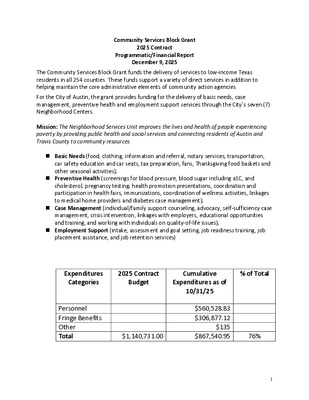
Community Services Block Grant 2025 Contract Programmatic/Financial Report December 9, 2025 The Community Services Block Grant funds the delivery of services to low-income Texas residents in all 254 counties. These funds support a variety of direct services in addition to helping maintain the core administrative elements of community action agencies. For the City of Austin, the grant provides funding for the delivery of basic needs, case management, preventive health and employment support services through the City’s seven (7) Neighborhood Centers. Mission: The Neighborhood Services Unit improves the lives and health of people experiencing poverty by providing public health and social services and connecting residents of Austin and Travis County to community resources. ◼ Basic Needs (food, clothing, information and referral, notary services, transportation, car safety education and car seats, tax preparation, fans, Thanksgiving food baskets and other seasonal activities); ◼ Preventive Health (screenings for blood pressure, blood sugar including a1C, and cholesterol; pregnancy testing; health promotion presentations, coordination and participation in health fairs, immunizations, coordination of wellness activities, linkages to medical home providers and diabetes case management); ◼ Case Management (individual/family support counseling, advocacy, self-sufficiency case management, crisis intervention, linkages with employers, educational opportunities and training, and working with individuals on quality-of-life issues); ◼ Employment Support (intake, assessment and goal setting, job readiness training, job placement assistance, and job retention services) Expenditures Categories 2025 Contract Budget Cumulative Expenditures as of 10/31/25 % of Total Personnel Fringe Benefits Other Total $1,140,731.00 $560,528.83 $306,877.12 $135 $867,540.95 76% 1 Transition Out of Poverty Goal Goal Achieved TOP Individuals who transitioned out of poverty 41 24 Success Rate% 58% Austin Public Health Report on PY24 Community Action Plan MISSION: To prevent disease, promote health, and protect the well-being of our community. TOP 5 NEEDS: Housing; Basic Needs; Employment; Health; Income Report Date: October FNPI Outcome Description Target #Enrolled #Achieved Success Rate % 4 4E 5 5B 5D SRV 4C 4I 5A 5JJ 7A 7B 7D 7N Housing Households who avoided eviction Health and Social/Behavioral Development Individuals who demonstrated improved physical health and well being Individuals who improved skills related to the adult role of parents/caregivers Service Description Rent Payments Utility Payments Immunizations (Flu) Food Distribution Case Management Eligibility Determinations Transportation Emergency Clothing 3A.1 Total number of volunteer hours donated to the Agency Programmatic/Administrative Updates 1000 533 533 53% #Enrolled #Achieved 20 50 37 99 19 91 Success Rate % 95% 92% Number Served 533 A Year Ago 158 400 69,559 172 784 23 774 1,723 198 265 82,980 1,103 1. Neighborhood Services – We offer Basic Needs including Food Help, Emergency Rental assistance, Utility Assistance, Self-Sufficiency Case Management services, Bus Passes, Health Screenings, Information & Referrals, and Seasonal Services* at our seven Neighborhood Centers.** *Child Safety Seats, Fans, and Income Tax filing. 2 ** The South Austin Neighborhood Center is currently closed for major HVAC renovations. The public is being directed to the other Neighborhood Centers for services. Expected reopening: TBD. 2. Food Help – The Neighborhood Centers in collaboration with the Central Texas Food Bank offers food distribution events that provide a variety of shelf-stable goods, fruits, vegetables and other fresh foods to low-income families. These distributions supplement existing grocery budgets with much-needed nutritious foods. 3. Financial Stability Rental Assistance Funding – From January – November we assisted 564 people in 245 households avoid eviction using these funds. The total amount of rent assistance payments was $715,847.46. 4. Austin Energy Plus 1 Program – Serious illness, a recent job loss, or the pandemic can make it difficult for some customers to pay their utility bills. The Plus 1 fund helps by providing emergency financial aid to customers who have a temporary problem paying their utility bills. 5. NSU Public Health Nursing - The Neighborhood Services nurses are offering free health screenings at the Neighborhood Centers. Services included: blood pressure screenings, blood sugar screenings, cholesterol screenings, health education, hemoglobin A1c, pregnancy tests, and general health information & resources. The NSU nurses also offer services at events at the Consulate of Mexico, Gus Garcia Recreation Center, Conley-Guerrero Senior Activity Center (CGSAC), and the Baptist Community Center Mission. Through October, the NSU nurses administered 400 Flu Vaccine at the Neighborhood Centers to underinsured and uninsured people. 6. Self-Sufficiency Case Management Services – The Neighborhood Services Unit social workers help clients reenter the world of work, connecting them with resources, agencies, and training opportunities; including assistance with housing stability, basic needs, and public transportation. They have provided case management services to 172 individuals this year. We are on calendar year target to reach our grantor’s Transition Out of Poverty (TOP) goal of 41. 7. Success Stories – See below. In the Social Worker’s own words: When this client first enrolled in the program, they were juggling classes at culinary school, caring for their children, and holding tight to the hope that life could look different. Just a few years earlier, they and their kids had been staying at a homeless shelter, unsure of what the next day would bring. 3 This year, everything came full circle. After graduating from culinary school, they were offered a job as a cook at that very same shelter. The place that once gave their family a safe space during their hardest times. Now, instead of arriving as a resident, they will walk through those doors as part of the team, serving meals and hope to others who are where they once were. They shared how proud and grateful they feel to be working and able to give their kids the Christmas they deserve this year. “It feels good to go back,” they said. “I know what it’s like to be on the other side of that line and now I get to help.” 4